Monday, October 29, 2018

Sarah's story

Anyone who has been in education has students who stick with them, some for a lifetime. Sarah is one of those students for me. I first met Sarah when she joined our YouthBuild program. YouthBuild is a federally funded project that combines completing high school credentials with learning work readiness through construction (the students actually build a house). I remember our first conversation because she was really upset about something she thought was unfair. I was struck by just how upset she was, but I was also impressed by just how articulate she was about the topic of who got to go to McDonald's and who didn't. By the time we resolved the great fast food fairness debate, I knew she was going to do well. Sarah completed her HSED while she was in YouthBuild and also was awarded 9 college credits through our use of Credit for Prior Learning, a poverty informed practice I've referred to in earlier essays. (John's Story) Sarah is currently a student at Western pursuing her dream of working with children. She volunteers extensively at her church and works with homeless people on a regular basis, including hosting a Super Bowl party at her home last year for a number of people with no place to go. She's pretty remarkable, but her path has not been easy. But I'll let her start that part of the story.


Like a lot of students we meet, Sarah had a challenging background. The more we learn about poverty informed practice the clearer it is we could have failed her early on because she didn't know the norms some would have referred to as the dreaded "common sense", which I've described my dislike for before: Things not to say. Fortunately for us, Sarah started in YouthBuild and our Adult Diploma program, which embrace poverty informed practice by approaching students from a strengths-based perspective and providing them with the support they need to thrive. And although Sarah didn't use the syntax or grammar we might expect of students someday, her instructors could tell immediately that she was extremely bright and engaged in the world. In fact, her life experience was truly an asset and she parlayed it into 9 college credits even while completing her HSED! She turned out to be quite a student, but as we got to know her, it turned out she's an even better person.
Sarah has been a regular presence in our department as she's worked her way through college. I like to think we are a safe home base and she is part of our extended family that we create for students, and I suspect that is all true. But Sarah is unique and embodies some practices we seek to emulate. I asked her to tell a story that served as an example:

 
I've mentioned in earlier writings my admiration for the sharing culture of people in poverty, but Sarah's Super Bowl party took my breath away. An idea like that would never occur to me. And she certainly wasn't doing it to show off or to impress. She was doing it because people had no place to go and she had a place they could be. She did it because being homeless shouldn't mean you don't get to enjoy America's secular holiday, Super Bowl Sunday. One of our poverty informed premises is that the students with barriers teach us how to improve. Sarah taught me a lot that day.

Poverty informed practice means understanding the norms of our colleges are constructed by humans and are therefore fallible and can be changed. Poverty informed practice means looking at policies and procedures and making sure they serve students, not punish students. Poverty informed practice means challenging ourselves to see what barriers are simply human constructs that exclude the talents of people like Sarah. Barriers include the obvious ones like child care and transportation, but they might also include the academic calendar (Amarillo cut all courses to 8 weeks), attendance policies that don't allow for the reality of crappy cars, textbook lending policies designed for traditional students who are on campus, archaic financial aid rules, and myriad other pieces of "common sense". Poverty informed practice requires us to look at all of those things and see how we can make them serve Sarah.

A two year college is a promise. It's a promise of opportunity. A division like mine, that serves students on the very front end of that promise must strive to create opportunity for everyone. We must start with the premise that if a student can't succeed, we must not have the right policy, procedure, or person in place to help them succeed (liberally borrowed idea from Amarillo College). That is a powerful premise and runs counter to the narrative I hear so often. That narrative says students must meet some arbitrary standard of "readiness" and it betrays the promise of our division in my opinion. In my Division readiness will be signified by entering our door. I had the opportunity to address our college on our College Day in September and I tried to share that message as part of a movement. A piece of that video is below.

College Day address

"They bring us their dreams, and they bring us dreams they don't even know they have yet." That is a powerful responsibility and every day I see Sarah at the College, I'm reminded that I made a promise I need to fulfill. And if our division isn't poverty informed, how can we expect anyone else to be? I can't wait to see where Sarah's dreams take her.


Monday, October 22, 2018

Our Little Movement

I applied for a big job at my college this spring and was a finalist (spoiler alert they hired someone else), and the process is what started this journey toward poverty informed practice in my division. In preparing my materials and getting ready for interviews, I needed to boil down what I believed in, and I needed to do it in compelling and concise ways. Poverty has always been an area of advocacy and interest for me, but I haven't pushed as hard as I might because I wasn't sure if others would follow... Would it be too much? Would I be written off as a bleeding heart? It was the day before my all-day interviews for finalists that it hit me. I was sitting in a hotel room in Springfield, Illinois attending my 2nd day of Donna Beegle training when it hit me. Our students with the greatest barriers teach us everything. They teach us how to get better in ways that students with more advantages never could. Basically, it became clear that removing barriers wasn't just the right thing, it was the smart thing! Building structures that work for people in the crisis of poverty is a form of Universal Design that benefits everyone. For years, I have given the same advice to folks who asked me to mentor them: "Don't worry about what you want to be, worry about want you want to do." Now it was time to take my own advice, and when the college chose someone else (she's great by the way), I knew nothing had changed for me. I knew what I wanted to do. And I wrote my first "Poverty Informed Friday" email to my staff the Friday after I found out. I was going to lead toward removing every barrier that was removable because it's what I believed was best for students. I'd like to share a little about what has happened to us since we committed to poverty informed practice.

First a piece of data that has my attention. We monitor enrollment very closely in my division because it is connected to state aid and performance-based funding. Like most institutions our funding situation is challenging, and we have had to make tough staffing choices. So, it seemed counter-intuitive when I realized our enrollment for our summer session had increased 25% over the prior summer. Can that be attributed solely to our poverty informed efforts? Of course not, but it seems worth exploring. Our premise is that we are going to create the most welcoming environment possible and create a level playing field where we work with people versus doing things for them. Enrollment credit in our area increases when we retain students (state funding tracks actual attendance), so I would also suspect that a welcoming atmosphere, sense of partnership, and our commitment to removing barriers has to have some positive influence on enrollment and retention. For sixteen years I've been told that retaining students is more efficient than recruiting new ones. Perhaps we can quantify the payoff of changes in signage, hospitality, and behavior as we have more time and more evidence. Data is always key in making the case for what we are doing.
So, there is some empirical evidence that this matters for us. But there is also cool anecdotal stuff happening. You can feel a movement take hold as it spreads and this week we had the story of Tim and Eldioju (who we all call Dio). I've shared multiple times before about The Bowl where we provide snacks for anyone who wants them (Food for Thought.) The Bowl has grown to lots of people donating things and last week Tim knitted several hats to put by The Bowl.
Tim's wife teaches in our County Jail and Tim is currently unable to work because of debilitating back pain. But he can knit, and he cares, and he made Dio very happy without ever meeting him. My friend Dio is pictured modeling the sky-blue hat just days before the snow begins to fly here in Wisconsin. This is just one example of what committing to an idea seems to do. We've seen hundreds of dollars in donations come in to support food in The Bowl. Our VP of Finance asked if he could join me on our walks to connect with
the homeless. (Theory to Action) And staff from every corner of our stressed out, overworked institution have reached out to say they want in. In fact, someone I had not met yet emailed me today to say she felt like she should "join the movement." If there is a lesson for other aspiring poverty informed practitioners, I think it is simply to lean in and be committed to the idea. It's not just right, it's smart, and raw belief will attract people to what you are doing.
 
Perhaps just as exciting as our internal movement growing is finding likeminded people across the country and across the globe. In just months we have connected with Amarillo College, Paul Quinn College, Sara Goldrick-Rab's #RealCollege crusade, Dr. Donna Beegle and many others inside and outside of education. Our relatively tiny action has inspired conversation and created possible partnerships already. I am in awe of the people I just listed, and they are miles ahead of us, but they have embraced us as part of a genuine movement. My staff and I are working as hard as we have in years, but this unifying belief and purpose is very sustaining. Connecting with others and telling our story and learning from theirs is edifying and inspiring at the same time. It's interesting that one of Dr. Beegle's tenets we adopted is that we must create belonging for people because it is a basic human need. Turns out that belonging is just as important for us, who knew? :)
 
So, our little movement is in its infancy, but we are not going back. We can't, it's too important. We know the tough discussions are coming and we are going to have to make the case for what we are doing, to individuals who aren't sure if people "deserve" what we are doing. I'm no crusader, and we certainly haven't found the perfect formula or gotten everything right. I'm just your typical middle aged, middle manager, but I find inspiration everywhere. Today I found it in the words of the
amazing Brené Brown. We will continue to choose being "brave and afraid. At the exact same time." Isn't that what our students do when they cross our threshold and trust us with dreams they may not even have dreamt yet?

Monday, October 15, 2018

Project PROVEN

One of the guiding lights of our growth to poverty informed practice is Dr. Donna Beegle. I was fortunate to attend a training Dr. Beegle put on in June and left with her book See Poverty... be The Difference.
We also have a trained Beegle Poverty Coach on campus, but more on her later. In fact, I started writing these articles right after returning from that training because I wanted to document our transformation and the concrete action that Dr. Beegle helped inspire. One of the best things about Dr. Beegle's book is the practical list of recommendations for leaders, teachers, and others. Her guidance to make sure we understand leadership for serving people in the crisis of poverty requires flexible, comprehensive approaches, and a long-term commitment to daily focus on the vision of helping people succeed made me think of the best and most poverty informed project at Western; Project PROVEN.

PROVEN is a re-entry from incarceration project we started with a Department of Education grant in 2013, one of three in the nation (and the only one in a county jail). It started as a demonstration project to implement a new reentry model with education at the center (shown to the right),
but it has grown into a comprehensive anti-poverty program that has taught us a lot about becoming poverty informed. PROVEN is a program that partners with multiple entities in our community to provide a comprehensive and holistic support network for participants/students. PROVEN provides meaningful coursework both in the jail and on campus that can be taken seamlessly between the two classrooms and along with strong case management, propels people toward a stable life and their dreams. Not only does this meet Dr. Beegle's guideline on using community partners, it honors our premise that we do not throw people away in our community. To quote Dr. Beegle "People living in poverty are not deficient and have tremendous potential when given adequate support." That statement might define our evolution. That statement also begins our fight to show people what "adequate" is. But more about PROVEN...

Case management is an essential feature of PROVEN. We believe that relationships are critical for working with individuals afflicted by poverty and having a case manager that you meet in the jail and see on campus or vice versa is part of that. Help is normal and available where you are, not where we expect you to be. We have exceptional staff leading this project and my role as Project Director has gotten more tangential over time. However I stated regularly in 2013, one of our markers for success would be when we discussed class locations for the college and "the jail" just rolled off the tongue as one of them. I think we have achieved that goal. A poverty informed program doesn't care where you start, it only cares about helping you start. So, while in the last year our division has adopted the mantra "every barrier that CAN BE removed, SHOULD BE removed", we have been practicing that in PROVEN for years. The case manager(s) have also been our eyes into how our policies align for people in poverty. PROVEN is a constant lens into how we unintentionally erect obstacles that don't need to be there or accidentally put us in a mode of deciding who "deserves" help. Those moments are red flags that we are getting it wrong.

Dr. Beegle challenges us to reflect regularly on what we are doing and does it work or not work for people in poverty conditions. PROVEN has a weekly staffing that includes project leaders, case managers, and instructors to answer exactly those questions and to make sure we are doing everything we can for participants. It is a group that embodies my ideal of adult education: "Optimism and Amnesia." For many years, I have told our staff across our coursework and programs that we must unconditionally believe in our students' ability to succeed and when they don't succeed, forget about it and believe again. That is optimism and amnesia, and it's not completely poverty informed, but it's a heck of a place to start. So PROVEN is a beautiful microcosm of a comprehensive poverty-informed program. That means figuring out where it fits on campus can be a challenge. College campuses tend to have isolated "silos" and PROVEN is clearly "unsiloed", as is poverty informed practice in my opinion. Is PROVEN an educational program, or an adult education transition program, or a retention effort, or a community vitalization program, or maybe the beginning of a non-profit agency? The answer to those question is "yes" with the possible exception of the last one since we believe being at the college is part of the "secret sauce" that makes PROVEN go. We direct students to many of the same services and partners that a Human Services agency would, but we do it by stealth as part of going to college. The stigma is reduced. A poverty informed practice suspends judgment and we do that relentlessly.

So, I'm not just a do-gooder. Programs like PROVEN are a great investment and the resources allocated to it pay off with a huge multiplier effect. Students in the County Jail will be released, and they will be our friends and neighbors. It is in everyone's best interest to help them succeed emotionally, socially, and economically. Investments made in these students (who are motivated and in college) reduce recidivism and give choices that move people from the crisis of poverty. That benefits everyone. I'll leave you with the story of Jordan. Jordan had struggled with addiction and had been incarcerated multiple times. He was ready to make a change, but he also met Tonya (project coordinator and Beegle certified poverty coach) and the staff from PROVEN. They approached him with a strengths based approach and unconditional belief. If you have time please watch the 4 minute video of Jordan winning a 2016 Job Honor Award. You can see the cross-functional approach, the respect for Jordan's strengths and motivation, and the belief and love (yes love) PROVEN staff brought to his life. Jordan says one minute into the video that Project PROVEN "saved (his) life", but in reality he showed us the way to do what we needed to do. Jordan's video

Sunday, October 7, 2018

From Theory to Action

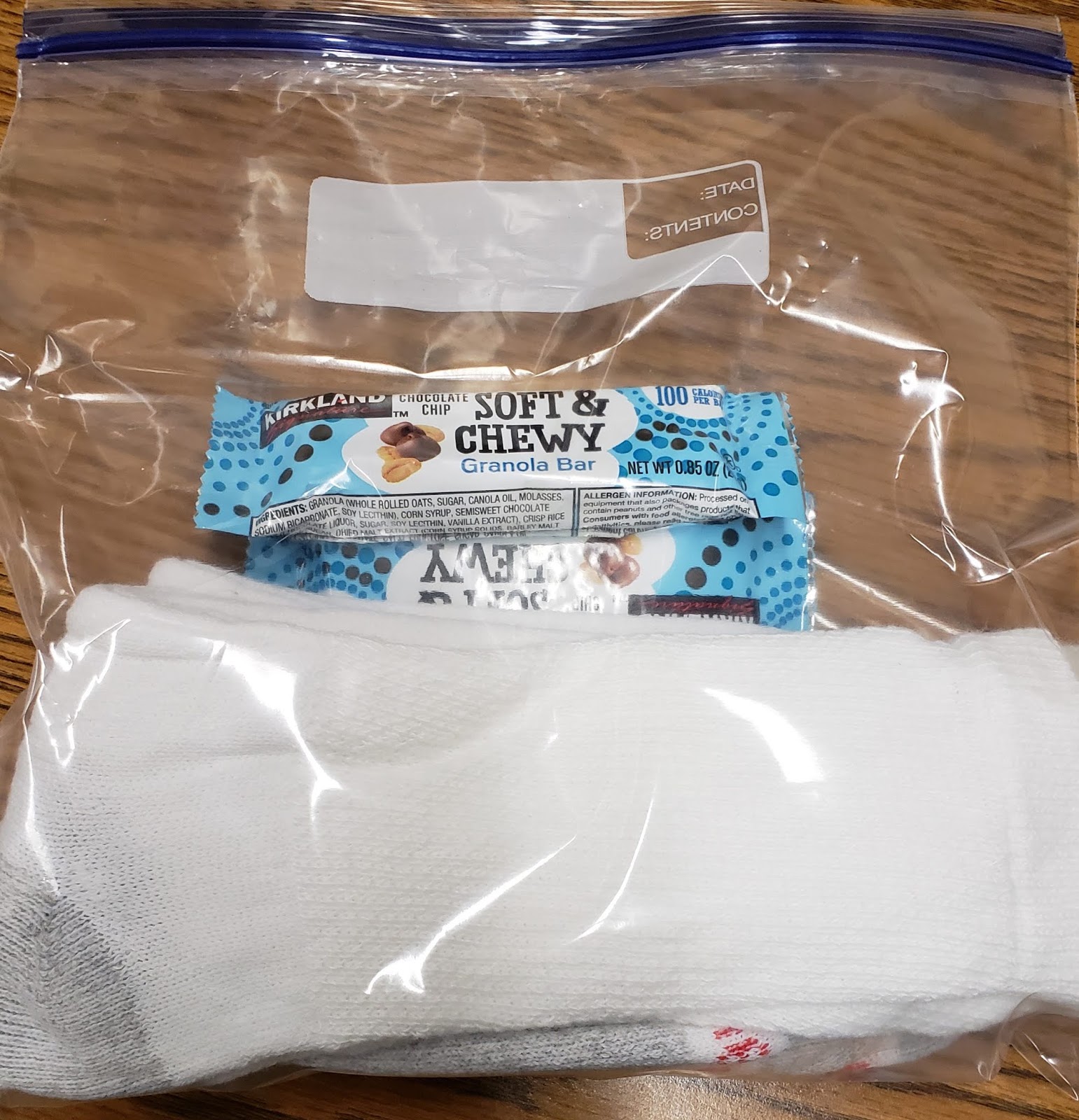
When I returned home from #RealCollege last Monday night, I was ignited and overwhelmed all at once. The enormity of the issues facing our students was never clearer, and it was hard to know where to begin. As I mentioned in an earlier article (A Call to Action), the reality of homelessness in Philadelphia was moving, and I came home wanting to do something. After hearing Mark Horvath of Invisible People say that the greatest barrier to solving homelessness was our inability to relate to it, I decided to take his advice and go out and see if I could do a little to help and meet people as people. I made up some woefully inadequate introduction kits pictured here. 
It was just two pairs of socks and some granola bars I hoped would break the ice, and I could see what else people might need and perhaps even preach the gospel of the poverty informed education we are trying so hard to offer. Mandy, my associate dean, who had been so moved the weekend before, wanted to come too, so we waited until Friday. Right before lunch time, we threw a few baggies in my messenger bag (aka man purse) and her bag as well and set off to the neighborhood around the college.

We started out at the park across from our Administrative Center, which has had a number of people in it all summer but is emptier now as the weather is changing. On this day, we could only see two people. There was a man sleeping next to a wheelchair and about 20 feet away there was a young woman. We didn't want to wake anyone up, so we approached the young woman, and I quickly realized we had no real plan. "Hi, are you staying out here?" is what came out of my mouth... She responded "No, I'm just waiting for a friend," which was clearly not true. Now I began to see this exchange through her eyes and realized what I saw as two very nice adults looking to help could be seen very differently for a young woman alone in a park. Mandy could sense the awkwardness as well and jumped in and asked if the young woman was a student at Western and told her we worked at the college. She also assured her we were not selling anything or handing out bibles. That didn't seem to ease her anxiety either, and in hindsight might have sounded like we were telling her she couldn't be there... At this point, I knew we needed to move on, but I wanted to reassure her. I said, "My name is Chad, this is my friend Mandy, and we are just seeing what we can do to help people." She let down her guard a little and told us her name was Maddie, but as we walked away, she quickly got up and walked across the street to the public library. It was hard to believe we had done anything but frighten her. It was not an auspicious beginning.

After a less than successful encounter with Maddie, we walked on and engaged in some gallows humor about how bad we were at this, but we resolved to keep trying. Our discomfort seemed mild in comparison to the people we were meeting. A couple blocks away we came across a young man sitting in a sleeping bag next to a bicycle. I still didn't have a good opener, so I went with "Hi, how are you" this time. Fortunately, he was very friendly and outgoing and said hi back. I offered my socks and granola bar package, and he enthusiastically accepted. I introduced myself and he said his name was Brandon. Mandy asked him what else he thought he might need, and he said he wasn't interested in money, but if we could ever help him with a good bike lock it would help him protect his bike. The idea of him having to sleep with one eye open to protect that very important asset has stuck with me. I asked Brandon a little about how he had ended up outdoors, and he shared he didn't want to stay at the Salvation Army currently and felt like he had what he needed where he was. I asked if he had ever considered coming to school, and to my surprise, he said he was a student at Western. When I asked what he was studying, he said he was just "brushing up" right now but was thinking about the paralegal program. As he said brushing up, I realized I had seen him before, and he was a student in my department. This was real college indeed...

As we were talking with Brandon, we were quickly approached by a couple from further down the block. The man introduced himself as "Joe Johnson from Wisconsin", and his partner introduced herself as Lynn. Joe was a frenetic character and took a bag of socks and immediately put on a clean pair. Lynn was more reticent and said the socks probably wouldn't fit in her shoes because they were thick athletic socks. We made a note to have some bags with socks for women the next time out. When we asked what else they might need, Lynn mentioned a cup of coffee cost $.94 and Joe said he could use a couple dollars too. We were glad to help out. As we got to know each other, Lynn shared she had been on the streets for three years. I asked what they did as the weather got colder, and they mentioned that the warming center would open November 1st for overnights and when I asked what they would do during the winter days, they said "survive." Lynn shared she had 4 children she didn't see very often, and it was very hard to get off the streets once you were on them. She said she struggled with alcoholism for much of her life as well. Mandy may believe in education as the path out of poverty more than anyone I know, and she jumped right in to asking Lynn if she had considered coming back to school. Lynn said she wasn't really thinking about it, but had considered going back for a GED maybe. Our college is 3 blocks from where Lynn was staying, and she didn't know anything about it. Mandy told her classes were free, the building is warm, and we provide snacks for guests. Her interest perked up and I hope we see her soon. What an audacious act of courage it would be to pursue her GED. Wouldn't it be our moral imperative to do everything we could to make that happen? And if nothing else, she knows there is a place in town where she could be warm, get a little something to eat, and people would believe she has a future. I wish I'd been brave enough to ask these three to let me take a picture, but I didn't that day. I hope to see them again and take one if they will let me. I can't help but just hope they are safe. I drove by their spot yesterday, and they weren't there, so I don't know how permanent it is.

So, it was an interesting morning with a pretty bumpy start and a finish that showed us the humanity of people in our community. Poverty informed practice says relationships matter, contexts matter, and community matters. If we are serious about trying to help people change their economic reality and the arc of their future stories, it seems we must start by simply engaging. It was an emotional morning, and the things we could bring to them seemed so woefully inadequate, and our own lives seem so privileged and a little ridiculous in comparison. Lynn thanked us for stopping to talk and said many people act like they aren't even there. It was embarrassing to think I had walked past people just 5 days earlier in another city. It is hard to know what to do or where to start, but eye contact and some socks at least started a conversation with some people who had names and life stories, and maybe just a little more hope after our time together.

Friday, October 5, 2018

#RealCollege lessons learned and a call to action. Emmie's story.

This weekend I attended the #Real College convening with two of my most trusted allies at work. To say that the conference was great would be a gross understatement. It is rare at this stage of my career to not only learn new information, but to hear a clear call to action you feel compelled to follow immediately. I was moved by Dr. DeRionne Pollard's challenge to show "raw courage" and be willing to experience "good trouble" in the name of making sure basic needs issues don't prevent us unleashing the talent of ALL our students. I met several of my heroes from Amarillo College and made many connections I hope will lead to future work together. In addition, I spent some time in a breakout session with Mark Horvath of Invisible People and even got to talk with him personally later (I might have followed him out of the bathroom, glad he didn't mind), and that conversation led me back to a story from campus last week.

Emmie and the author
I've shared before about our snacks in the lobby (Food for Thought), which our students now affectionately refer to as "The Bowl." The Bowl has taught us so much about community and connection, and false perceptions of scarcity, but those lessons can be shared another time. Last week, The Bowl taught me about homelessness and heroism. Emmie (pictured with me to the right) is a full-time student at Western. She is working her way back from incarceration and participates in our Project PROVEN, a poverty-informed initiative that will get its own story here some day. I have noticed Emmie at The Bowl pretty regularly and even got a chance to have a brief conversation with her last week over some snacks. But I didn't know the whole story... Emmie's Case Manager, Jessica from PROVEN, pulled me into her office one day saying she had a story I needed to hear. Emmie had come into her office and asked "are those snacks really just for anyone?" Jessica assured her they were, and they are a simple act of hospitality. Emmie shared she was afraid she was taking too much, and Jessica assured her we have no limits or rules on guests eating food. Emmie's next response stopped me in my tracks. She said, "Good, because I stop there every Monday, Wednesday, and Friday (her class days). Before those snacks, I was only eating on Tuesdays..." I didn't know, but Emmie is homeless and going to school full-time. Our trail mix and granola bars are helping her make it through every week of school. What an audacious act of courage (credit to Dr. Pollard) it is to choose education in that situation.

Fast Forward to #RealCollege in Philadelphia a week later, a week I had spent much of thinking about Emmie and people like her. I had not been to Philadelphia before and at least the part of downtown I stayed in was a sea of homelessness compared to the relatively bucolic city of La Crosse where I live. Each night as my team and I walked back to our hotel, we saw countless people living on the streets, and it was deeply affecting. We each reacted in our own way, but it's hard to know what to do. Saturday night was the worst as we watched people (including us) walk past people asleep on sidewalks we couldn't be sure were alive, dead, or in need of medical attention. In fact, it was so overwhelming my Associate Dean was in angry tears by the time we returned. She was angry, and frustrated, and sad at the world, at herself, and at all of us that could be doing more to help. She said if we saw people lying unresponsive on sidewalks in any other situation, we would call 911, but we and all the others, just kept walking. No one knew what to do, and I couldn't stop thinking of Emmie and other students like her.

And then on Sunday, I met Mark Horvath and listened to his stories of engaging the homeless. It made me think of an earlier presentation by Dr. Karen Stout of Achieving the Dream, who told us we needed to establish Collective Impact models with our colleges at the center. She and the folks from Amarillo reinforced the role of the Community College has changed and whether we choose to be or not, we are in the social service business now, especially if we want to honor our open access promise and change the economic future of people, their families, our businesses, and our communities. When you combined our Saturday night experience with all this learning, I knew I needed to ask Mark what any of us could be doing, right now. Well as I mentioned, we managed to cross paths exiting the restroom, and he was incredibly generous in sharing what he knew, which was as simple as engaging people and asking what they need. He said he often starts those conversations by just having new socks (aka Freshies) to give to someone who might need them. And now I had an idea...

"Our inability to relate to homelessness is our biggest barrier to ending it." That's what Mark said at his presentation, and it made me think of Emmie, but it also made me think about the park across from our administrative center. There are a number of people there on any given day who are living there. No one on campus seems to know how to react, but I don't think anyone has gone the engagement route. So on behalf of heroes like Emmie, when I get home today I'm going to buy a bunch of socks and put them in my work bag. And tomorrow, I'm going to stop in the park and start the conversation. A poverty-informed approach doesn't throw people away and believes EVERYONE has the right to a future. It's time to put my money where my keyboard is. Stay tuned!

Everyone deserves another chance. A story about my Dad and the power of belief

With my Dad in Colorado a few years ago...
My dad is a local legend and I've been reluctant to share his story, but it teaches me everything about redemption, second chances, and belief. I have a pretty clear memory of a visit to stay with my dad in the mid 70's. My parents (pictured with baby me to the right) had a pretty amicable divorce and so I was able to spend a lot of time with both of them, although the custom of the time meant my mom had primary custody and I saw Dad on weekends and more in the summer. The reason I remember this particular visit was Mom dropped me (and maybe my little brother, but I can't remember) off at an apple orchard where Dad might have been working at the time. I remember that he was staying in a tent and had a cook stove and we had a nice camping adventure. If I'd been a little older, camping in an orchard might have seemed unusual, but it was just an adventure at the time. Fast forward to last June and I'm at a Dr. Donna Beegle workshop and she talked about how only middle-class people could invent camping. She said her family often "camped" which was just a euphemism for a period of homelessness. And the light bulb went on for me... So, on a recent trip to visit family I asked my dad about that visit and sure enough, Dad was homeless that summer. In fact, he confessed to me 40 years later that he had actually stolen the tent and I'm assuming the stove too. I could add this story to my collection of stories from the first 10 years of my life that demonstrated how situational ethics are and how easy it is to do the "right" thing when times are good. Dad "stole" a tree once to make sure we had wood to heat the house we were in and I have some vague recollection of him shooting a partridge once out of season, so we could eat. Maybe he remembers it differently.

Those times were objectively hard I suppose, but I didn't really know that until I was older. Dad was fun and our collection of Volkswagen vans that seemed to not have heaters or occasionally catch fire didn't seem to faze him. He must have been stressed out beyond comprehension, but I don't remember seeing it. In hindsight I can see the insidious hand of poverty pushing him away from dreams and into choices that made less sense all the time. This came to a head when I was about 7 or 8 (maybe 9 I'm not sure I recall). Poverty causes desperation and as my Dad's family grew, so did his desperation. My weekend visits to his small home in the middle of nowhere now involved sleeping in the living room because upstairs, the solution to our problems was drying and getting ready for sale. It was the 70's so marijuana wasn't an unusual thing in either of my homes, but Dad figured out he knew how to grow it, and someone convinced him he could sell it for real money. I remember talk of $10,000 and a trip to Hawaii, but my memories of that time are spotty. I do remember clearly the day Dad and some friends were sitting at the table playing cards or something and suddenly there was an army of police in the front yard. I remember standing outside while they searched the house and I remember telling Dad that I thought they might have missed some and him telling me that would help pay for the attorney. They found everything. My most searing memory of that day is overhearing the police saying they couldn't reach my mom and maybe my brother and I would need to go to foster care until they could reach her. There were no cellphones in those days, but fortunately they were able to reach her, and we went home. Dad ended up being sentenced to 30 days in jail and I suppose his story should have ended there. But it didn't...

After his relatively brief time away (I shudder to think what the sentence would have been in this day and age), Dad decided that his real dream was to be a teacher and a coach. It didn't make any sense for a convicted felon, but he believed and belief matters. Dad returning to school became a family project, although I was only a part-time participant. My siblings who lived with him saw more, but I remember a change jar to save for tuition, I remember a Ford Pinto with over inflated tires to get better mileage (and occasionally too many people stuffed in it), and I remember a family on a mission. I also remember Dad bringing home Shakespeare books and being on fire as he got a chance to stretch the intellect we all knew he had. Dad is incredibly charismatic, and we were all on fire with him. Belief is contagious and people around Dad began to believe in him too. His adviser at college knew that the world needed Dad in the classroom and Dad has shared that every time money was running out, some would mysteriously show up. He realized later that his professor took care of parts of that because of his belief in my dad. That professor changed my life without ever meeting me and it has inspired me to pay it forward including the development of an emergency fund at my college that honors the practice of faculty helping students directly. Here's video of me telling the story to develop our fund with our College Foundation: College Day Speech.
All of that belief led to my dad teaching 9th graders for 30 years. He has a gift for being genuinely interested in them and their lives. His doorway was always full of students from the moment he arrived, often with the most vulnerable kids in the building. He won national recognition for organizing a Renaissance Faire run completely by students. I remember it being written up in USA
Today. He is also a basketball coach with nearly 400 wins. This is picture after win 300, surrounded by family. As I said at the beginning of this article, he's a genuine local legend.
So, what does this teach us about Poverty Informed practice? Everything... We must approach students not to give them just a second chance, but another chance. My dad could have been written off at many points, but those additional chances led to so much payback for the world. This story teaches the power of belief. Not only do our students need us to believe in them, we need to help them create a sense of belief and self-efficacy that will protect them from the inevitable ups and downs. College professors believed in my dad just because they could see his gifts and that changed the whole course of my family. And this story teaches us to never underestimate potential. If we don't believe in students, sometimes before they believe in themselves, the world might miss out on the gifts of the great hiker pictured here
Dad in his beloved mountains


Poverty Informed practice does not throw people away, we need everyone.

Food for Thought

I wrote not too long ago about our desire to remove every barrier that we can as part of our poverty informed practice. I've written more about that idea (Declaring the Movement) before, but I'd like to share what it looks like in practice and what we've learned from it. For those of you who have been reading this series of articles (and thank you for doing that), you will recall I committed to having food in our lobby for anyone to take. It's just snack food, but it's something. We admire our friends at Amarillo College and their culture of caring and this is one small attempt to emulate it here. There's a picture up above from Monday morning. It's hard to learn if you're hungry, and this helps a little, but in reality, having food out is more poverty informed than I knew.

People in the crisis of poverty have some remarkable qualities. One of which is a generosity and a sharing culture that I remember from my childhood and admire to this day. Food in our lobby is a small way of acknowledging that we value that quality and that we welcome you to our "home." Surviving poverty requires an interdependence that means when times are good you help others, because when times aren't good, they will help you. This is our way of saying times are good for us and we know it's our turn to help. We do so without judgment and without question. We do it because that is what people do. Food has created community for ages and watching people stop by for a snack before class and engaging them in conversation is just another opportunity to build a relationship. We believe that relationships are paramount in being poverty informed and food helps that happen. Oh yeah, and people are hungry, this was the bowl three hours later.

I came across an interesting post on Dr. Donna Beegle's Facebook page about a week ago. it said "What does someone have to do to be worthy of your help? Reflecting on this question will help you identify subconscious bias." This felt like an idea I have written about before about deciding who "deserves" (Things not to say) our help, but now we had a live lab to uncover our own bias. Earlier, well-intended, discussions about student hunger had produced emails about making sure food is "just for students in poverty." But that doesn't feel like building community to me and how would we verify? There is so much judgment around poverty and food. A recent graduate working her way out of poverty shared with us that she was grocery shopping and bought a bunch of fresh produce. When she pulled out her EBT card at checkout, another patron remarked it must be nice to be able to afford that stuff on the taxpayer dime... The same student shared that if she had come up with a cart of cheap junk food, she would have been judged harshly for that as well. Poverty can be a no-win proposition. Our food is simply for guests. We also have fantastic office staff, but I knew that I needed to give them explicit direction to not correct or chastise students for taking too much or too often. This is an exercise in letting go of judgment and letting go of how people "should" behave. My staff has followed that direction, but we have had people express frustration about people "stocking up." This led to great discussions about how we don't know who they are taking it for and we don't care. We do not worry about who deserves food, lots of people deserve food, and this isn't charity it is hospitality and community. But it's been an interesting way to uncover and discuss our own biases. We are better for it. I think the last poverty informed practice here is that we don't tell them who provided the food and we don't ask for gratitude. We do not require you to be grateful to be worthy of our help...

Other cool things have happened since the Sunday night I bought trail mix and granola bars and put them out. Other people started bringing things in, which was nice but not surprising (teachers are good people). We also had cash donations from staff and when we started to share our story on social media, we had donations from the outside. The health promotions director from a regional health system wants to partner up and I need to make that happen. Our hope has been that our poverty informed division will spread to a poverty informed college and community and that is starting to happen! We have a great stash of snacks that are out for the day and we refill when we run out. I see students stopping every hour and they are pleased and engaged. I also made a point to tell staff these are community items and if they are hungry to help themselves. A poverty informed program leverages relationships at every opportunity and if a large bowl of snacks creates community, all the better! I believe it has also started to shift our focus on students. We can see them more as guests and people.

Being poverty informed is a tough concept to define concretely. So much of what we are trying to do seems like just being a good person and several people who have read these articles have given me that exact feedback. And they are absolutely right. Poverty Informed practices and solutions are solutions for just about everyone! That's why we don't think of what we are doing as just being the right thing, it's the smart thing. Everyone we serve benefits from being treated with respect, from being seen for accomplishments and strengths, from a relentless future focused approach, and from a place of belief. Having snacks in the lobby has started to change our behavior, our language and our conversations. It is a small thing that may have powerful ripple effects. I'd encourage you to consider it. Every Barrier That Can Be Removed Should Be Removed.